

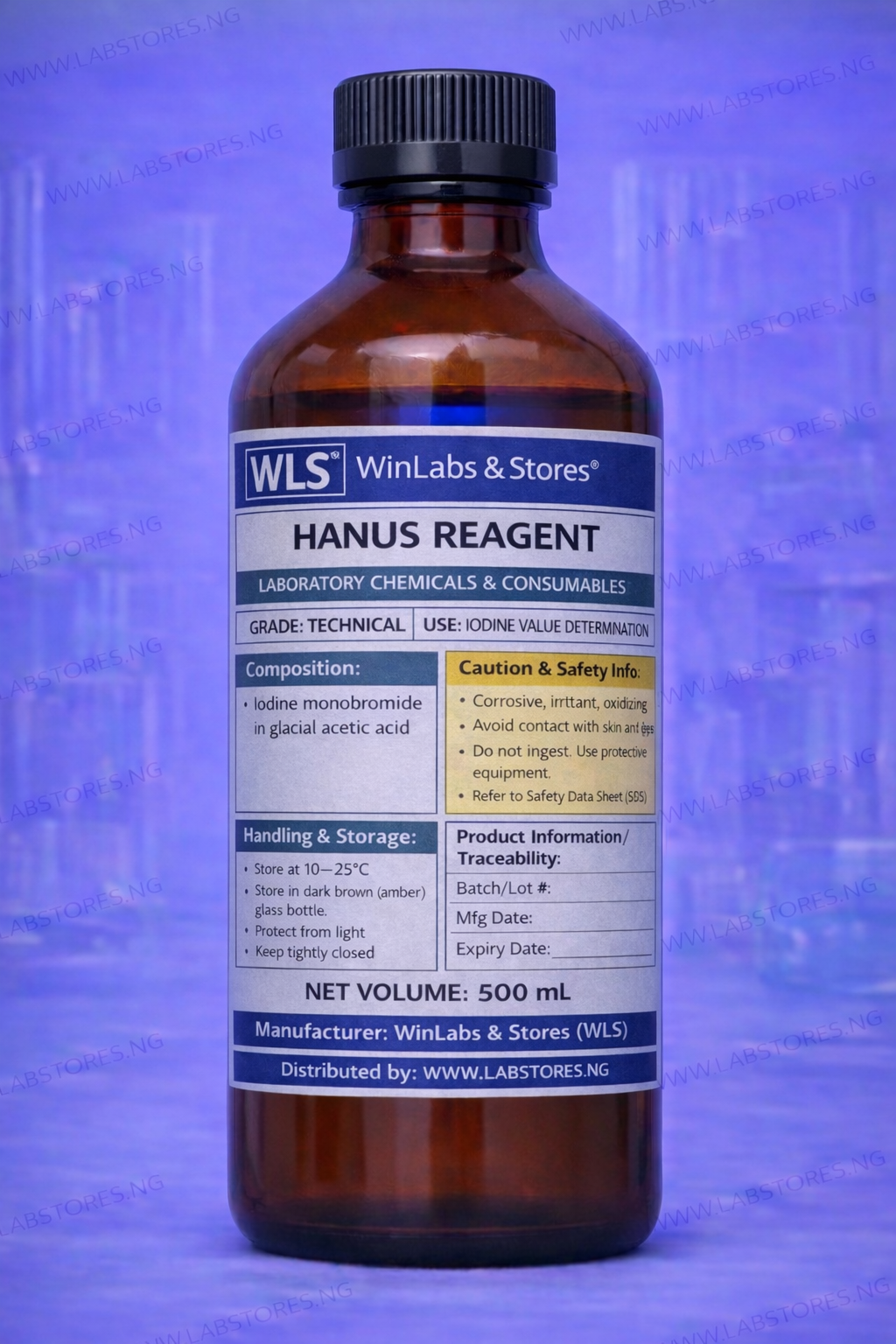
Description:
Hanus reagent is a classical halogenating reagent used for the determination of iodine value (IV) in fats, oils, and biodiesel. It functions by reacting iodine monobromide (IBr) with carbon–carbon double bonds, enabling quantification of the degree of unsaturation.
Compared to Wijs reagent, Hanus reagent is slightly less reactive but still widely recognized in traditional analytical protocols.
Key Use / Application:
Determination of iodine value (IV)
Physicochemical analysis of:
Edible oils
Industrial oils
Fats and waxes
Biodiesel
Typical Composition:
Iodine monobromide (IBr) — active halogenating agent
Glacial acetic acid — solvent medium
CAS / Component References:
Iodine monobromide (IBr): CAS 7789-33-5
Acetic acid (glacial): CAS 64-19-7
Comparable Supplier References:
Available from major chemical suppliers such as:
Sigma-Aldrich / Merck
Thermo Fisher Scientific
Loba Chemie
SRL (Sisco Research Laboratories)
BDH / VWR
Associated Reagents (Test Method):
Potassium iodide (KI)
Sodium thiosulfate standard solution
Starch indicator
Organic solvent system (as per AOAC/AOCS method)
Handling:
Use in a well-ventilated area or fume hood
Avoid inhalation and direct contact
Wear appropriate PPE: gloves, goggles, lab coat
Prevent contamination with incompatible substances
Storage:
Store at 10–25°C
Keep in amber glass bottle
Protect from light
Keep tightly closed
Hazard Information:
Corrosive and irritant
Strong acidic medium
Reactive halogen compound
May cause burns to skin and eyes
Harmful if inhaled or ingested.









Reviews
There are no reviews yet.